What a One-Camera Walk Teaches You About Seeing
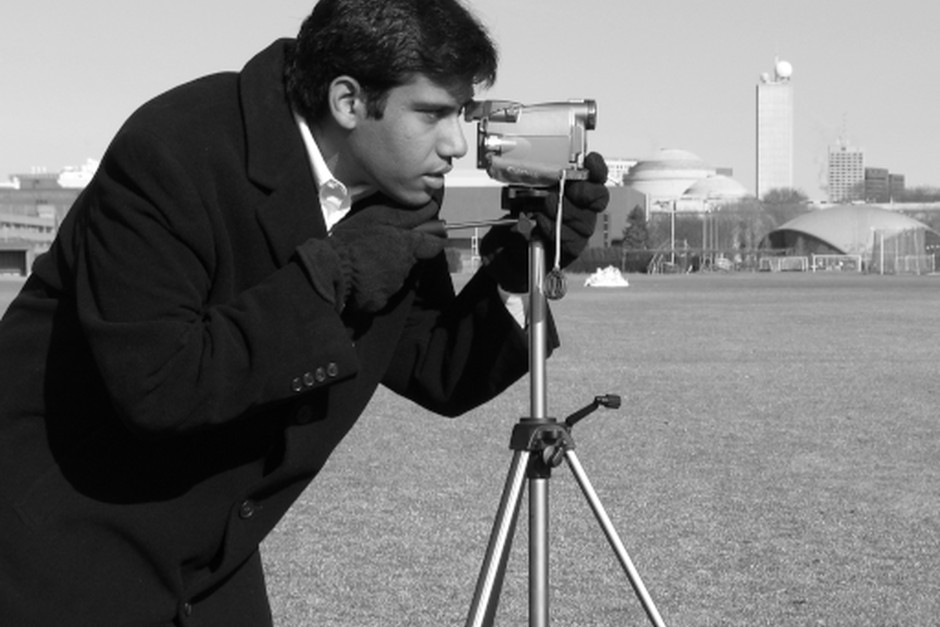
Photography walks often begin with a familiar problem: deciding what to carry. A second lens seems useful, then a spare body, then a tripod “just in case.” Before long, the walk has become an equipment-management exercise. Taking a single camera with a single lens changes the mood immediately.
The limitation sounds restrictive, but it gives you fewer decisions to make. Instead of asking which lens would be ideal, you ask what can be done from where you are standing. That turns attention away from the bag and back toward the street, path, weather, and people moving through the frame.
Distance becomes part of composition
With one fixed field of view, your feet become the zoom. You step closer for a stronger foreground, move back to give a building room, or accept that a subject will remain small within a wider scene. These physical choices make composition easier to understand because you feel the change before you press the shutter.
A useful exercise is to photograph the same subject from three distances. First make the obvious frame. Then get close enough that details begin to dominate. Finally move away until the subject becomes part of its surroundings. The three images will often say very different things.
Familiar places stop being automatic
A local route is ideal because you are not distracted by the pressure to document everything. You can notice how evening light reaches one wall, where reflections appear after rain, or how a row of trees changes the rhythm of a pavement. Repetition is an advantage: the place stays similar while the light and your attention change.
Try walking the route at a different hour than usual. A street that feels flat at noon may become graphic in late light. An ordinary underpass may look entirely different on an overcast day when there are no hard shadows.
Make fewer frames
Another useful constraint is to wait a few seconds after you think you have found a picture. Check the edges. Look behind the main subject. Ask whether moving half a step would remove a distraction. This small delay can improve a photograph more than taking ten near-identical versions.
It also makes the walk quieter. You are not hunting constantly for the next subject; you are watching for relationships between shape, light, distance, and timing. Some walks may produce only a handful of photographs, but those frames are easier to remember and evaluate later.
Review for patterns, not winners
When you return, resist judging the outing only by whether it produced a favourite image. Look for repeated habits. Do you place subjects in the centre every time? Do you avoid getting close? Are your strongest photographs usually made in softer light? A one-camera walk is useful partly because it makes those patterns visible.
The point is not to prove that less equipment is always better. It is to create a clean learning environment. Once you know what you tend to see—and what you tend to miss—extra lenses become tools rather than distractions.